
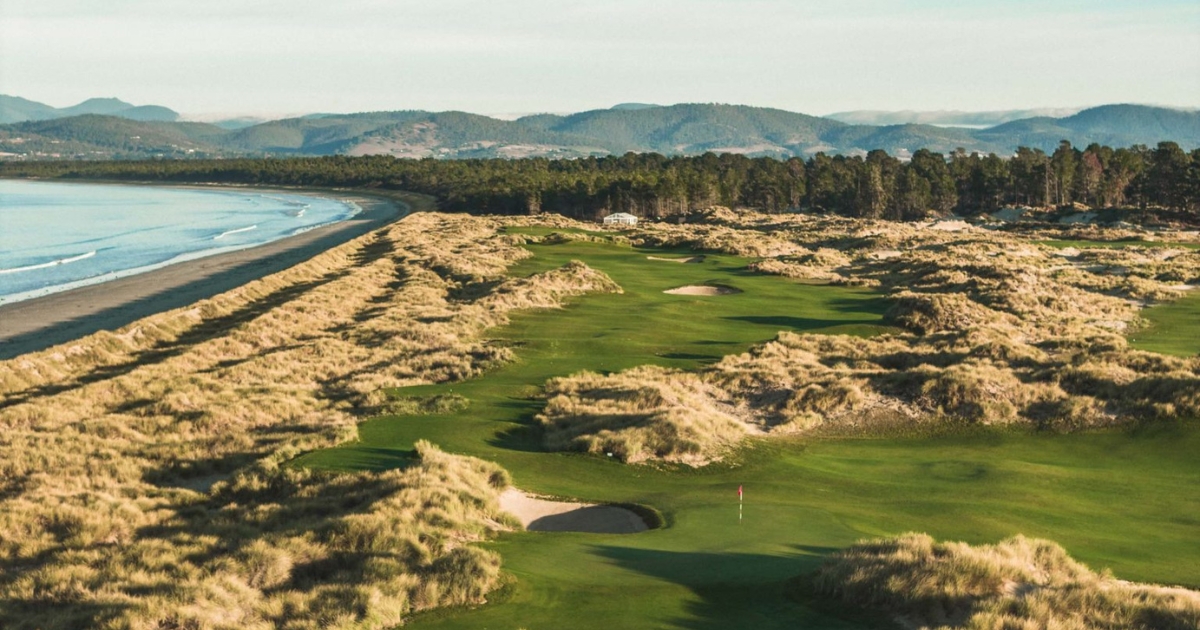
Tasmania has become one of Australia’s most interesting golf journeys.
Barnbougle has been enough reason to travel here for years. Now 7 Mile Beach, built through the coastal dunes outside Hobart, gives southern Tasmania a serious golf anchor of its own.
And then there is King Island.
Cape Wickham and Ocean Dunes are good enough that golfers travelling this far will naturally ask whether they should add both.
The courses are not really the difficult part.
The question is how to join them together without turning a very good golf holiday into a succession of transfers, flights and hotel changes.
THE SHORT ANSWER
For a first Tasmania golf trip, 5 nights works particularly well.
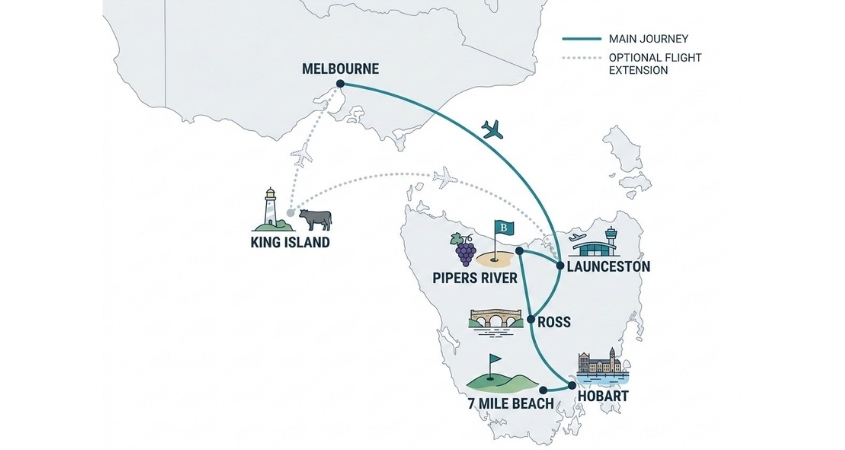
Fly from Melbourne to Hobart, spend two nights in Hobart and play 7 Mile Beach, travel north through Tasmania to Barnbougle, stay three nights and play Barnbougle Dunes and Lost Farm, then fly from Launceston back to Melbourne.
If Cape Wickham and Ocean Dunes are priorities, extend the journey to 7-8 nights, travelling from Launceston to King Island before continuing back to Melbourne.
The principle is simple:
Keep moving forward rather than backtracking.
CLASSIC TASMANIA
Suggested length: 5 nights
Main rounds: 3
Hobart: 2 nights
Barnbougle: 3 nights
King Island: —
Main golf: 7 Mile Beach, Barnbougle Dunes, Lost Farm
Optional golf: Bougle Run
Australian gateway: Melbourne in / Melbourne out
TASMANIA + KING ISLAND
Suggested length: 7–8 nights
Main rounds: 5
Hobart: 2 nights
Barnbougle: 3 nights
King Island: 2 nights
Main golf: 7 Mile Beach, Barnbougle Dunes, Lost Farm, Cape Wickham, Ocean Dunes
Optional golf: Bougle Run
Australian gateway: Melbourne in / Melbourne out
For many first-time visitors, five nights is enough.
For others, travelling this far and not playing Cape Wickham will be much harder to accept.
Both approaches can work.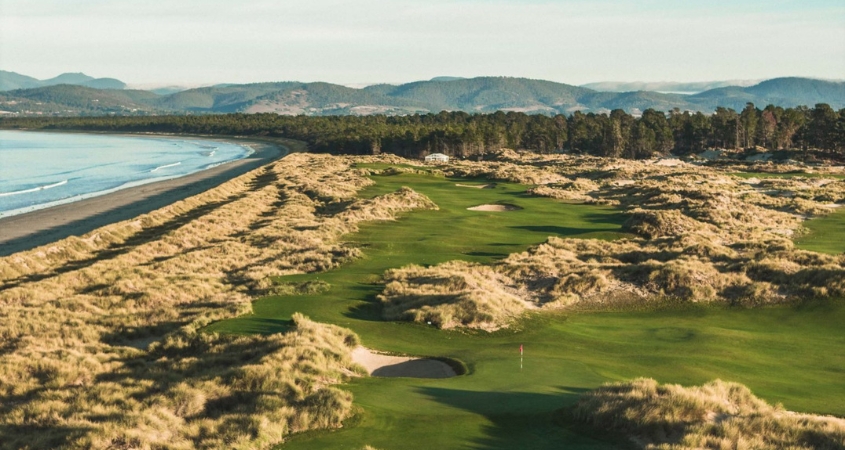
 WHY TASMANIA’S GOLF DESERVES THE JOURNEY
Rankings shouldn’t decide where you travel.
But they can tell you when an unusual concentration of very good golf exists.
Tasmania is a good example.
Golf Australia’s 2026 rankings place Cape Wickham #2 in Australia, Barnbougle Dunes #4, Lost Farm #5, 7 Mile Beach #9 and Ocean Dunes #18. That gives Tasmania five courses inside Australia’s current Top 20.
The international recognition is significant too.
Golf Digest’s current 2026–27 World’s 100 Greatest includes Cape Wickham at #13, Lost Farm at #38 and Ocean Dunes at #100, with Barnbougle Dunes also remaining within the World 100.
The exact positions will change.
Panels differ. New courses mature. Established courses evolve.
So choosing a course because it sits fourth rather than fifth in a ranking misses the point.
The more useful takeaway is:
Tasmania has an extraordinary concentration of serious golf for an island of its size.
And much of it is accessible to travelling golfers.
MELBOURNE IS THE NATURAL GATEWAY
For many international golfers, Melbourne is the most practical gateway for this particular route.
The journey starts:
International → Melbourne → Hobart
and, after travelling north through Tasmania:
Launceston → Melbourne → International
Direct commercial services operate between Melbourne and both Hobart and Launceston, making the south-to-north routing straightforward.
There is no need to return to Hobart after Barnbougle.
If King Island is added, the route becomes:
Melbourne → Hobart → Barnbougle → Launceston → King Island → Melbourne
Every movement takes you forward.
For the normal commercial flights between Melbourne, Hobart and Launceston, golf clubs and personal luggage are handled through normal airline checked-baggage arrangements.
King Island is the sector that needs more thought.
THE 5-NIGHT TASMANIA GOLF TRIP
DAY 1: MELBOURNE TO HOBART
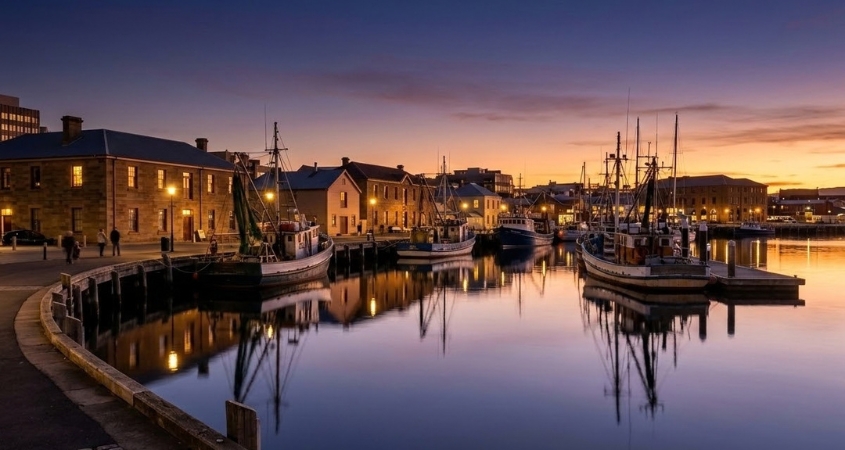
After arriving in Australia, connect through Melbourne to Hobart.
There’s no reason to schedule golf after a long international journey simply because 7 Mile Beach happens to be close to Hobart Airport.
Check in.
Walk around Hobart.
Have a good dinner.
The golf starts tomorrow.
DAY 2: 7 MILE BEACH
The Course That Changes the Tasmania Route
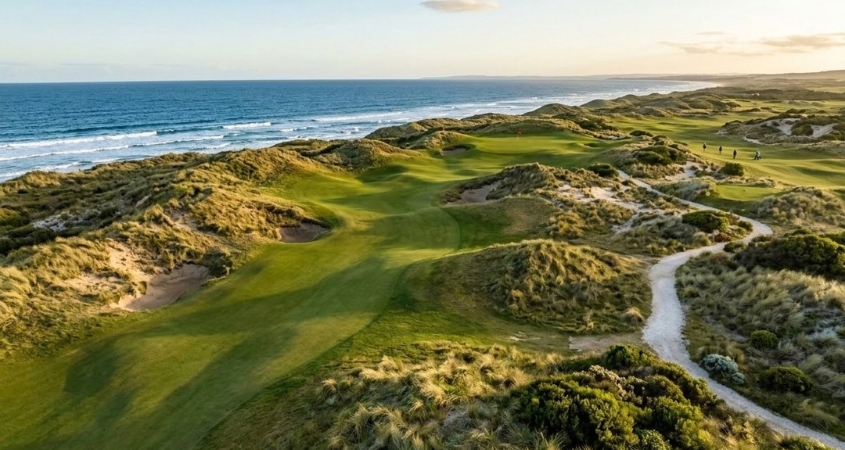 7 Mile Beach is the newcomer.
The South Course was developed through coastal dune land near Hobart, with preview play beginning in 2025 and the full 18 holes opening for public play later that year. The project grew from Mat Goggin’s vision, with design work by Mike Clayton and Mike DeVries.
It has made an unusually quick impression.
Golf Australia placed 7 Mile Beach #9 in Australia in its 2026 ranking.
But the ranking isn’t the most interesting thing about 7 Mile Beach from a golf-travel perspective.
It changes the route.
Hobart now has a golf course that belongs in a serious Tasmania golf itinerary rather than simply being the city where you arrive before heading north.
The course uses natural movement, width, angles and firm ground rather than trying to manufacture drama.
It should particularly appeal to golfers who enjoy strategic golf where the position of the tee shot influences what happens next.
Its proximity to Hobart and the airport is useful.
But that isn’t why we would play it.
GOLFTRIPZ VIEW
7 Mile Beach isn’t an airport round. It is one of the reasons to include Hobart.
Return to Hobart after the round and enjoy another evening in the city.
DAY 3:HOBART TO BARNBOUGLE: DON’T RUSH THIS DRIVE
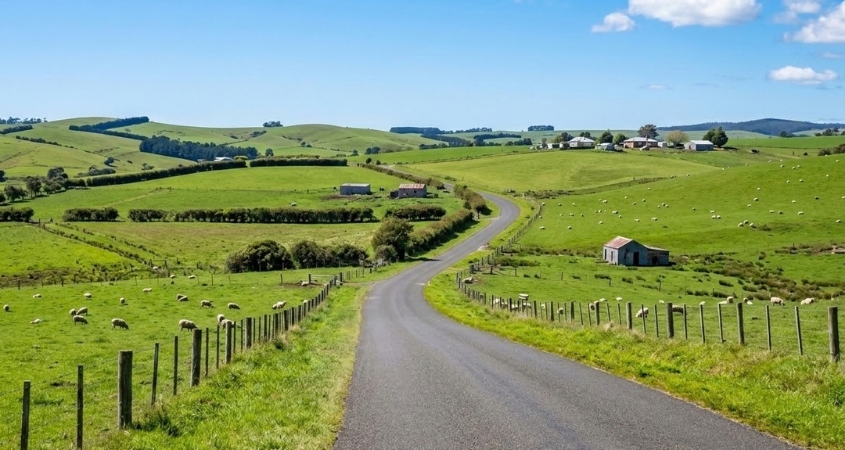
The simplest approach is obvious.
Put Barnbougle into the navigation system and drive north.
There is a better way.
This is the one day of the five-night trip when there is no flight to catch and no tee time to make. Use it to see some of Tasmania.
STOP AT ROSS
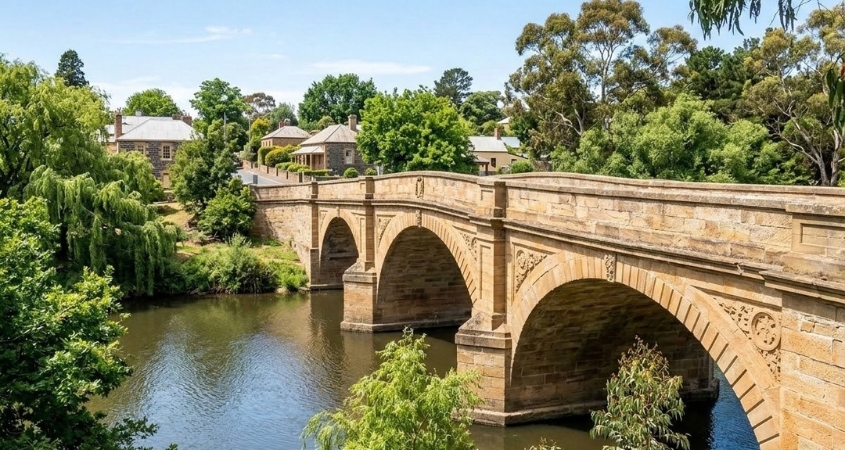 Leave Hobart after breakfast and travel north through Tasmania.
Ross makes an easy stop.
Walk through the historic village, see the sandstone bridge, have a coffee and continue.
You don’t need to turn it into half a day’s sightseeing.
An hour can be enough.
The point is simply to let the journey become part of the holiday.
CONTINUE THROUGH TASMANIA’S WINE COUNTRY
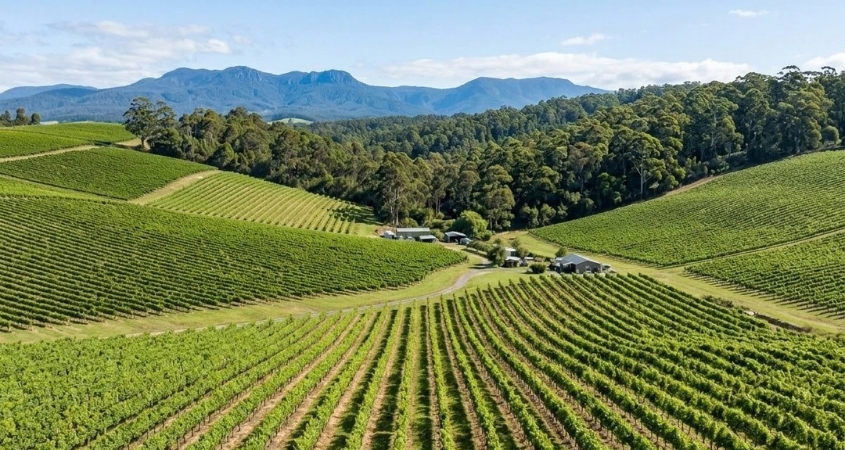
Continue towards northeast Tasmania and the Pipers River wine region.
For a golf group, we would probably choose one vineyard.
Have lunch.
Taste some Tasmanian wine.
Then continue to Barnbougle.
One good tasting adds to the journey. Four tastings change what the journey is about.
The golf remains central.
A comfortable day might therefore look like:
Hobart after breakfast.
Ross for a walk and coffee.
Lunch further north.
One vineyard in the afternoon.
Barnbougle in time to check in properly before dinner.
The timings don’t need to be rigid.
That’s rather the point.
The drive from Hobart to Barnbougle shouldn’t be regarded as the inconvenient bit between two golf destinations. It is part of the Tasmania golf journey.
BARNBOUGLE: MORE THAN TWO TEE TIMES
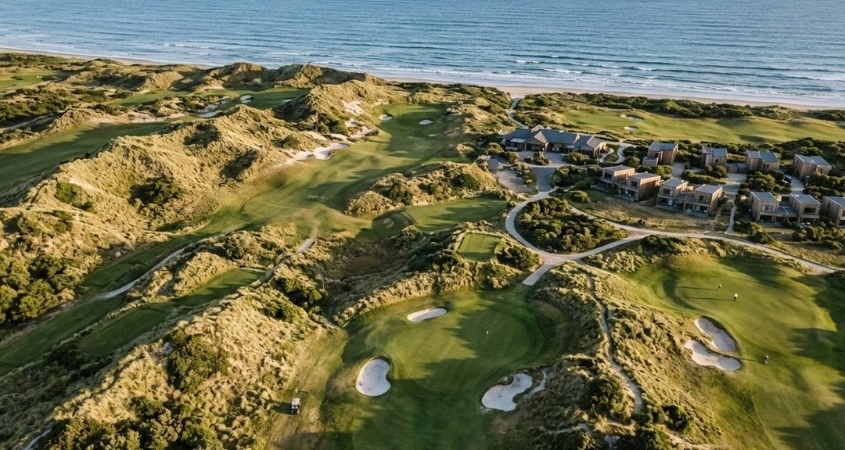
Once you reach Barnbougle, the pace changes.
Stop moving.
The golf, accommodation, clubhouse, food and coastline are all here.
For the next couple of days, there is very little reason to get back into a vehicle.
DAY 4: BARNBOUGLE DUNES
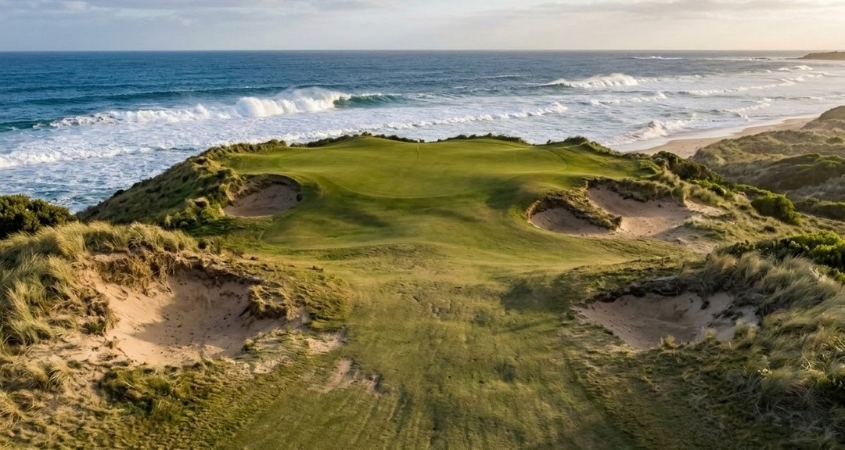
Barnbougle Dunes is the course that changed Tasmania’s golf story.
Designed by Tom Doak and Mike Clayton, it opened in 2004 across natural dunes beside Bass Strait. Barnbougle notes that it entered the World Top 100 the following year and has remained internationally recognised ever since.
Golf Australia currently ranks it #4 in Australia.
But rankings don’t really explain why golfers enjoy it.
This is firm-ground golf through genuine coastal dunes.
There can be considerable width from the tee, but that width creates choices rather than simply making the course easier.
Where you position the ball changes the approach.
The wind changes those decisions again.
Different golfers can find different ways of playing the same hole.
That is part of what makes good links golf so enjoyable in a group.
And when the round finishes, you are already home for the evening.
DAY 5: LOST FARM
Not Simply the Second Barnbougle Course
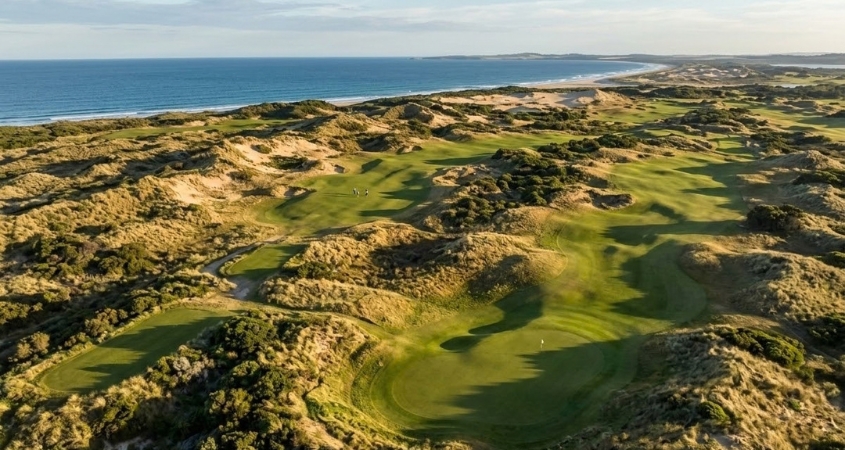
Lost Farm sits alongside The Dunes, but treating it as the supporting act misses the point.
Designed by Bill Coore, it opened in 2010 and includes 20 playable holes. Golf Australia currently ranks it #5 in Australia, while Golf Digest places it #38 in the world in its 2026–27 ranking.
The more useful point for the travelling golfer is the contrast.
Lost Farm is not simply another version of yesterday’s round.
The scale of the property, the routing and the mix of coastal and more inland terrain give it its own character.
Playing Dunes one day and Lost Farm the next gives Barnbougle enough depth to become a destination rather than somewhere you visit for one famous course.
For a first visit, we would play both.
AND THEN THERE IS BOUGLE RUN
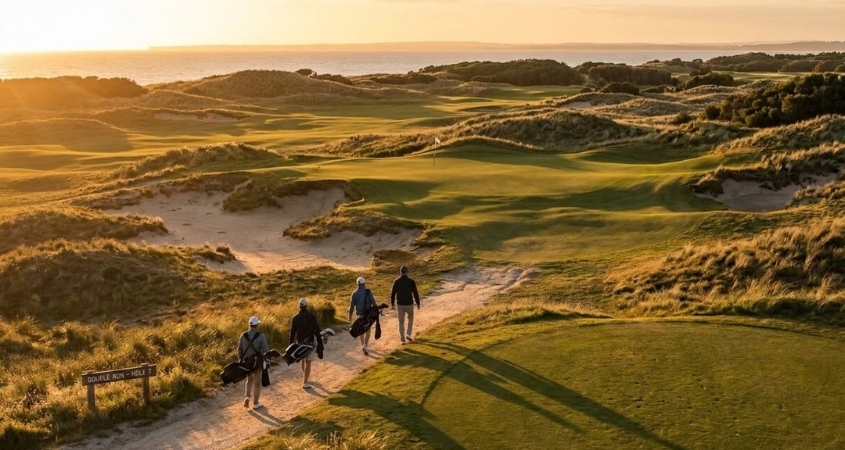 If the group still wants more golf, there is Bougle Run.
The 14-hole short course designed by Bill Coore is predominantly par threes with two short par fours and is designed to be played much more quickly than another full championship round.
This is exactly the sort of additional golf we like.
Finish Lost Farm and see how everyone feels.
If the group wants another club in its hands, play Bougle Run.
If everyone would rather head inside for a drink, do that.
More golf doesn’t automatically make a better golf holiday.
WHERE SHOULD GOLFERS STAY AT BARNBOUGLE?
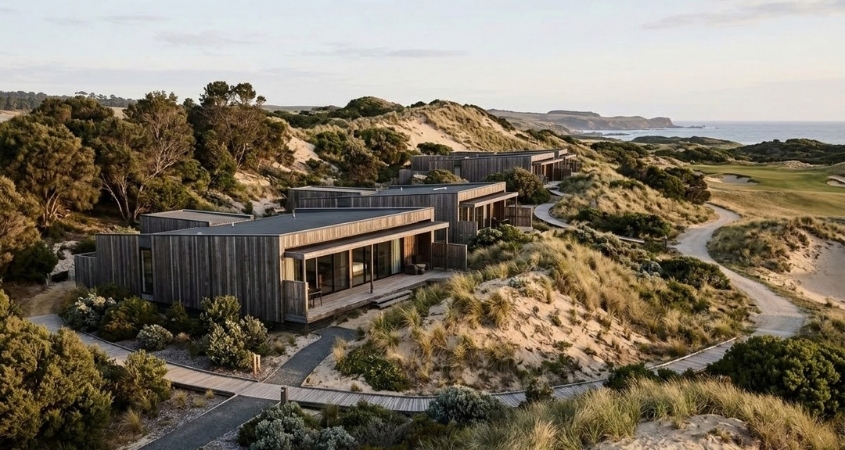 Staying onsite is part of what makes Barnbougle work.
For four golfers, the Bunker Villas are particularly interesting.
Each villa contains four queen bedrooms, each with its own private ensuite, arranged around shared living and dining space and a kitchenette. Barnbougle specifically positions the configuration for four singles or four couples.
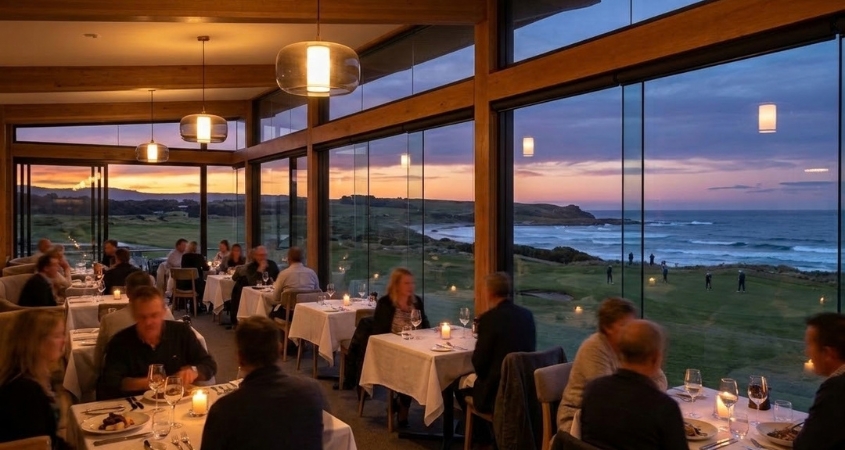 For a fourball, that is a very good setup.
Everyone has a proper bedroom and bathroom.
But after golf, everyone still has somewhere to sit together rather than disappearing into four separate hotel rooms.
Barnbougle has other accommodation formats as well.
We don’t need to list all of them here.
The right accommodation depends on who is travelling, how many golfers there are and how the group likes to spend its time after golf.
That is something worth choosing rather than simply booking the first available rooms.
BARNBOUGLE AFTER THE GOLF
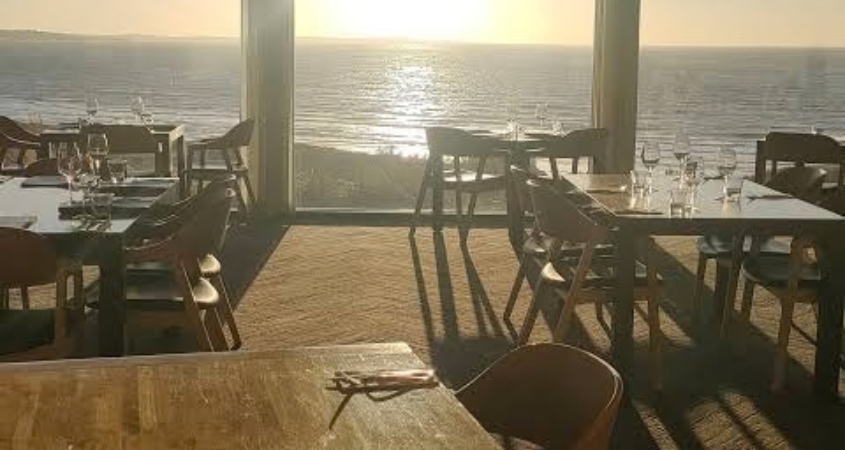 Barnbougle is primarily about the golf.
But the experience after the round is better than you might expect from somewhere this remote.
The Lost Farm Restaurant sits on a coastal dune overlooking the course and coastline and is open for breakfast, lunch and dinner. The kitchen focuses on locally sourced Tasmanian produce, with menus changing regularly.
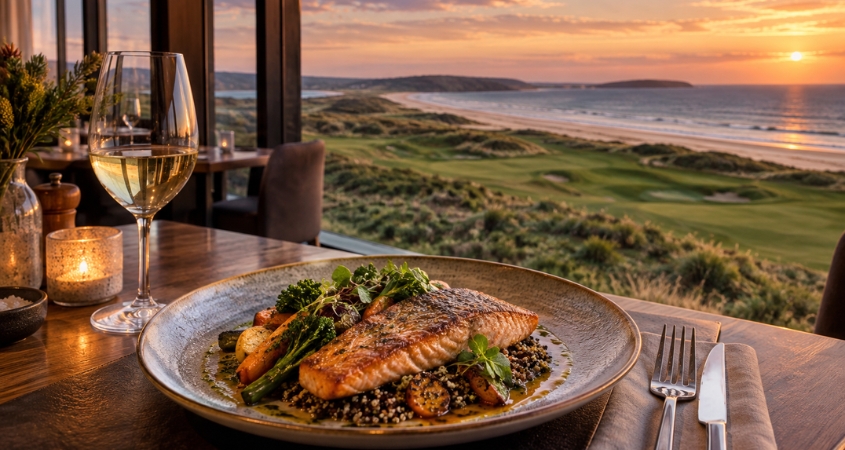 The wine deserves attention too.
Lost Farm maintains climate-controlled red and white wine cellars and offers a strong selection of Tasmanian and Australian wines.
That works particularly well if you have spent part of the previous day travelling through Tasmania’s cool-climate wine country.
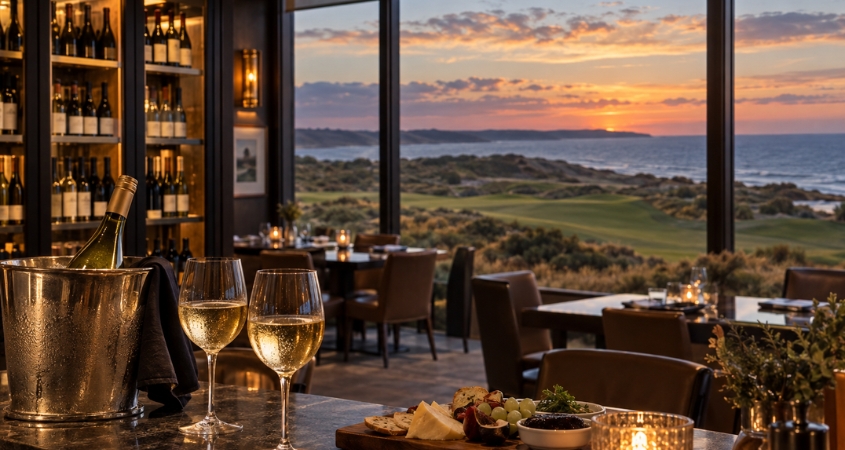
On my visits, I was also struck by how international the hospitality team felt.
For somewhere geographically remote, there was an interesting mix of people from different parts of the world working across the operation.
It gave Barnbougle a surprisingly cosmopolitan feel while the food, wine and setting remained distinctly Tasmanian.
And if whisky is your thing, there is another local connection.
To mark Barnbougle’s 20th anniversary, the resort collaborated with Tasmania’s Hellyers Road Distillery on a limited-edition 20-year-old single malt.
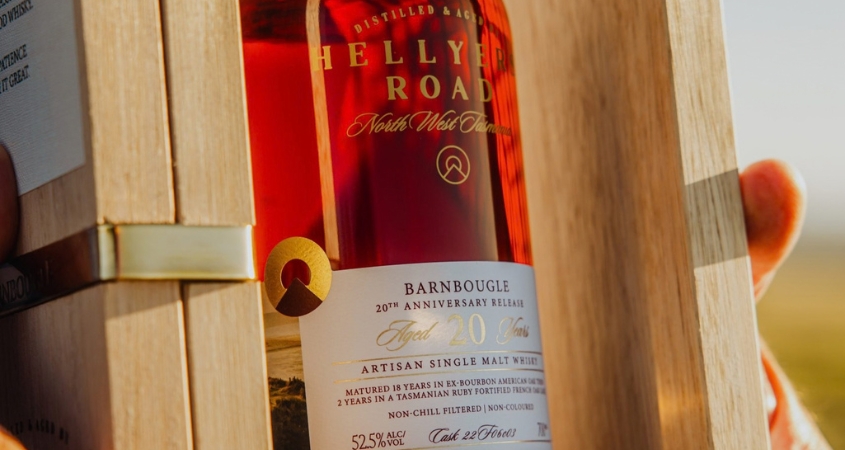 None of this is why you travel to Barnbougle.
Dunes and Lost Farm are.
But the golf holiday doesn’t stop when you leave the golf course.
Good accommodation, dinner, Tasmanian wine, perhaps a local single malt and another very good round waiting the following morning complete the experience.
DAY 6: BARNBOUGLE TO LAUNCESTON AND MELBOURNE
From Barnbougle, continue to Launceston Airport and fly back to Melbourne.
There is no reason to return south to Hobart.
The five-night journey therefore looks like this:
Melbourne
↓
Hobart — 2 nights
↓
7 Mile Beach
↓
Ross + Pipers River
↓
Barnbougle — 3 nights
↓
Launceston
↓
Melbourne
|
Three main rounds.
Two nights in Hobart.
Three nights at Barnbougle.
Very little backtracking.
For many golfers, this is the right first Tasmania golf trip.
SHOULD YOU ADD KING ISLAND?
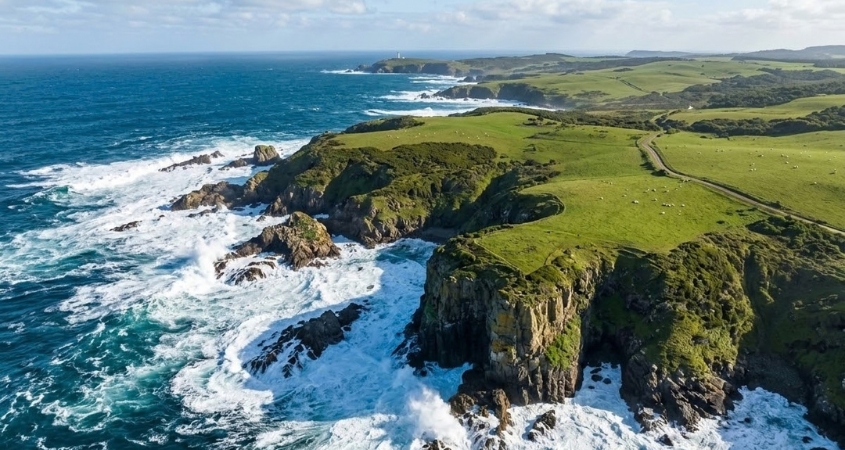 Then there is the golfer who looks at Cape Wickham and says:
We’ve come this far. We’re playing it.
Fair enough.
The important thing is not to compress Hobart or Barnbougle to make King Island fit.
Add another two or three nights.
The route becomes:
Melbourne → Hobart → Barnbougle → Launceston → King Island → Melbourne
King Island should be an extension to the journey, not something squeezed into it.
LAUNCESTON TO KING ISLAND
Regional services operate between Launceston and King Island, and King Island also connects with Melbourne Essendon.
These are smaller-aircraft sectors, so schedules and baggage capacity deserve more attention than the normal mainland–Tasmania commercial flights.
This is one part of the trip where we would reverse the normal planning process.
Fix the King Island flights first. Then arrange the golf around them.
CAPE WICKHAM
The Course That Can Justify the Extra Journey
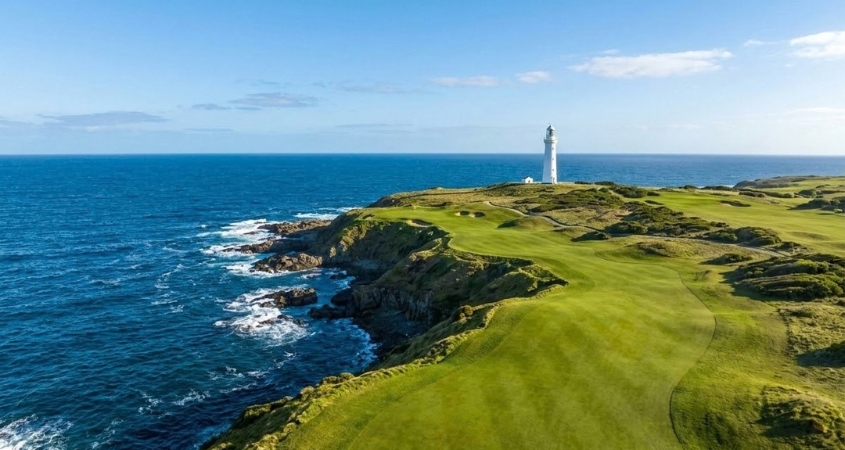 Cape Wickham is the course that persuades many golfers to add King Island.
Golf Australia currently ranks it #2 in Australia, while Golf Digest places it #13 in the world.
The setting is extraordinary.
The course occupies the northern end of King Island, with Bass Strait, beaches and the Cape Wickham lighthouse repeatedly entering the landscape.
But the scenery shouldn’t obscure the golf.
The coastline affects strategy.
Wind changes club selection and lines.
And the routing repeatedly brings the golfer back into contact with the sea.
This is one of those places where the setting and the golf are difficult to separate.
Give Cape Wickham its own day.
We wouldn’t fly in, race around it and immediately leave.
GOLFTRIPZ VIEW
If Cape Wickham is one of the reasons Tasmania entered the conversation in the first place, that may answer whether King Island belongs in your trip.
OCEAN DUNES
Why King Island Is a Two-Course Golf Destination
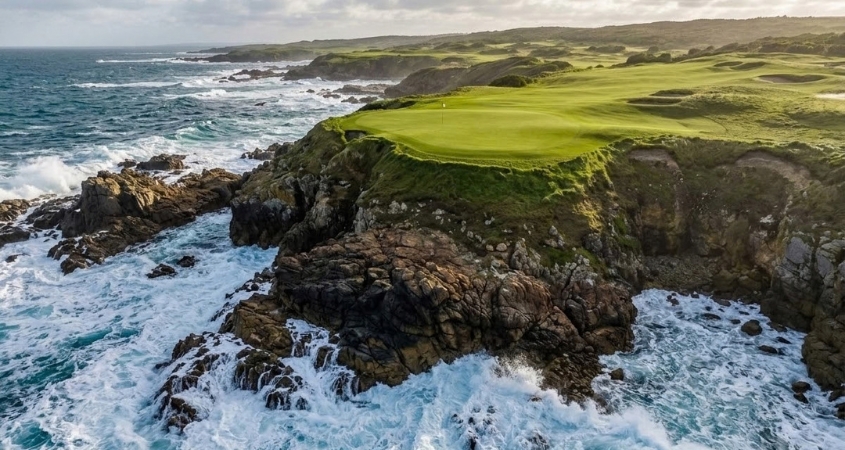 Ocean Dunes is important to the itinerary for a different reason.
It stops King Island from becoming a one-course excursion.
Golf Australia currently ranks it #18 in Australia, and Golf Digest includes it at #100 in the world in its 2026–27 list.
Built along King Island’s rugged coastline, it provides another exposed coastal golf experience, but with its own landscape and character.
Play Cape Wickham one day and Ocean Dunes the next and the additional flight begins to make much more sense.
King Island becomes a two-course golf destination rather than simply a Cape Wickham detour.
WHERE SHOULD GOLFERS STAY ON KING ISLAND?
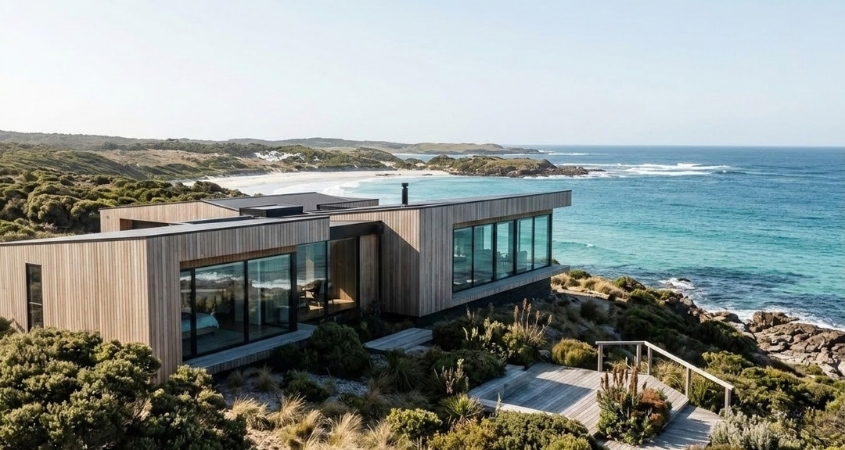
Again, accommodation can support the way a golf group actually travels.
One format we particularly like is King Island Lodge.
Its lodges have four bedrooms and four bathrooms, with each property taken exclusively by one group. The bedrooms can be configured as twin king singles, so the format works for four golfers wanting individual rooms or groups of up to eight sharing.
That is the sort of configuration that makes sense for a golf trip.
Private rooms when everyone wants some space.
A common area when the group comes back from the course.
There are other ways to stay on King Island.
Again, we wouldn’t list all of them here.
The right choice depends on group size, tee times, flight timings and how the group wants the trip to feel.
THE ONE LUGGAGE ISSUE WORTH PLANNING: KING ISLAND
For normal commercial sectors between Melbourne, Hobart and Launceston, luggage isn’t something that needs special planning.
Golf clubs and personal luggage can be dealt with through the normal airline baggage arrangements.
King Island is different.
The regional aircraft are smaller.
Baggage remains subject to available aircraft space and load restrictions, so a group arriving with full golf travel bags, large international suitcases and cabin baggage should plan this in advance.
For a small group, scheduled regional services may work perfectly well when everything is declared and confirmed in advance.
For a larger golf group travelling with full golf travel bags and large international suitcases, it may be worth considering a charter for the regional sectors.
Another possibility for a two-night King Island stay is to take the golf clubs and a small overnight bag to the island while the group’s main luggage is stored or moved separately.
There isn’t one answer for every group.
The important thing is to plan it before everyone arrives at the airport with eight golf bags and eight large suitcases.
Good King Island planning starts with the aircraft and the golf bags, not just the tee times.
KING ISLAND BACK TO MELBOURNE
King Island scheduled services use Melbourne Essendon Airport rather than Melbourne’s main international airport at Tullamarine.
That distinction matters.
If the international flight home departs from Melbourne Tullamarine, allow time for the transfer between airports.
Depending on flight timing, it may be possible to play Ocean Dunes and travel to Melbourne later that day.
But a tight same-day connection onto a long-haul international flight is a poor trade for saving one hotel night.
Sometimes the sensible final night is Melbourne.
WHEN IS THE BEST TIME FOR A TASMANIA GOLF HOLIDAY?
For many golfers, late spring through early autumn is the natural starting point when considering Tasmania.
Summer offers longer daylight hours, while early autumn can also work particularly well.
But this is exposed coastal golf.
Wind and changing weather are part of the experience.
That isn’t necessarily something to avoid.
It is part of playing these courses.
The better approach is to choose the season carefully, pack appropriately and avoid creating an itinerary so tight that every day depends on perfect conditions.
TASMANIA GOLF TRIP PLANNER
Barnbougle only: 3 nights
First Tasmania golf trip: 5 nights (7 Mile Beach + Dunes + Lost Farm)
Want Cape Wickham too: 7–8 nights (add Cape Wickham + Ocean Dunes)
Want more golf at Barnbougle: add Bougle Run
Want Melbourne Sandbelt golf: allow 10+ nights overall
Four golfers travelling together: consider 4-bedroom ensuite group accommodation
Larger group adding King Island: review regional aircraft and baggage logistics early
WHAT ABOUT MELBOURNE GOLF?
There is an obvious temptation.
You’re already travelling through Melbourne.
Why not add the Sandbelt?
You certainly can.
Royal Melbourne, Kingston Heath and the other great Melbourne courses can turn this into a much larger Australian golf journey, subject to access and availability.
But bolting a single rushed Melbourne round onto the itinerary just because you’re passing through rarely does it justice.
If the Sandbelt matters, give Melbourne enough time.
At that point you are no longer simply taking a Tasmania golf holiday.
You are building a broader Australian golf journey.
And that deserves proper planning of its own.
OUR VIEW
Tasmania works best when you stop thinking of it as a collection of famous golf courses and start thinking about the journey.
Melbourne is the gateway.
Hobart gives you the city and 7 Mile Beach.
The road north gives you a glimpse of Tasmania beyond the golf.
Barnbougle gives you a couple of days when you don’t really need to go anywhere.
And King Island, if you choose to add it, takes the journey into another level of coastal golf.
For many golfers, five nights is the right first trip.
For others, there will be one nagging question:
Would we regret coming this far and not playing Cape Wickham and Ocean Dunes?
If the answer is yes, don’t squeeze them in.
Add two or three nights and do King Island properly.
The question isn’t how many highly ranked courses you can fit into the itinerary. It is which version of Tasmania creates the right golf holiday for your group.
PLANNING A TASMANIA GOLF HOLIDAY?
Tasmania is relatively easy to understand on a map.
Putting the trip together well is more nuanced.
The right sequence of tee times, accommodation, flights and transfers, — particularly if King Island is included, — can make a significant difference to how the journey feels.
Golftripz can help build the route around your group, the courses you most want to play, the season and the pace of trip you prefer.
FREQUENTLY ASKED QUESTIONS ABOUT TASMANIA GOLF HOLIDAYS
What golf courses should you play in Tasmania?
For a first trip, we would build around 7 Mile Beach, Barnbougle Dunes and Lost Farm.
If time allows, add Cape Wickham and Ocean Dunes on King Island.
Bougle Run is an enjoyable optional extra at Barnbougle.
How highly ranked are Tasmania’s golf courses?
Golf Australia’s 2026 ranking places Cape Wickham #2, Barnbougle Dunes #4, Lost Farm #5, 7 Mile Beach #9 and Ocean Dunes #18 in Australia.
Is 7 Mile Beach worth including?
Yes.
Its ranking is impressive for such a new course, but the more important point is that it gives Hobart a genuine golf anchor and makes the south-to-north Tasmania route considerably stronger.
Should you play both Barnbougle Dunes and Lost Farm?
For a first visit, we would.
The courses are sufficiently different that playing both is central to the Barnbougle experience.
Should golfers stay at Barnbougle?
We would.
Staying onsite removes unnecessary transfers and makes the accommodation, clubhouse, dining and post-round atmosphere part of the experience.
Is there accommodation suitable for four golfers at Barnbougle?
Yes.
The Bunker Villas contain four queen bedrooms with private ensuites plus shared living and dining space, which is a particularly useful arrangement for a fourball.
Is King Island worth adding?
If Cape Wickham and Ocean Dunes are courses the group particularly wants to play, yes.
Shortening Hobart or Barnbougle just to squeeze them in isn’t the answer, though.
Add the time instead.
How do you combine Barnbougle and King Island?
After Barnbougle, travel to Launceston Airport and fly to King Island.
Stay two nights, play Cape Wickham and Ocean Dunes, then continue to Melbourne.
Are golf bags a problem on Tasmania flights?
Not generally on the normal commercial Melbourne–Hobart and Launceston–Melbourne sectors.
The part requiring more careful baggage planning is King Island, where smaller regional aircraft are used.
Can you combine Tasmania with Melbourne golf?
Yes.
Melbourne is already the natural gateway for this itinerary.
If serious Sandbelt golf is being added, however, we would allow additional days rather than squeezing a token Melbourne round around the flights.